

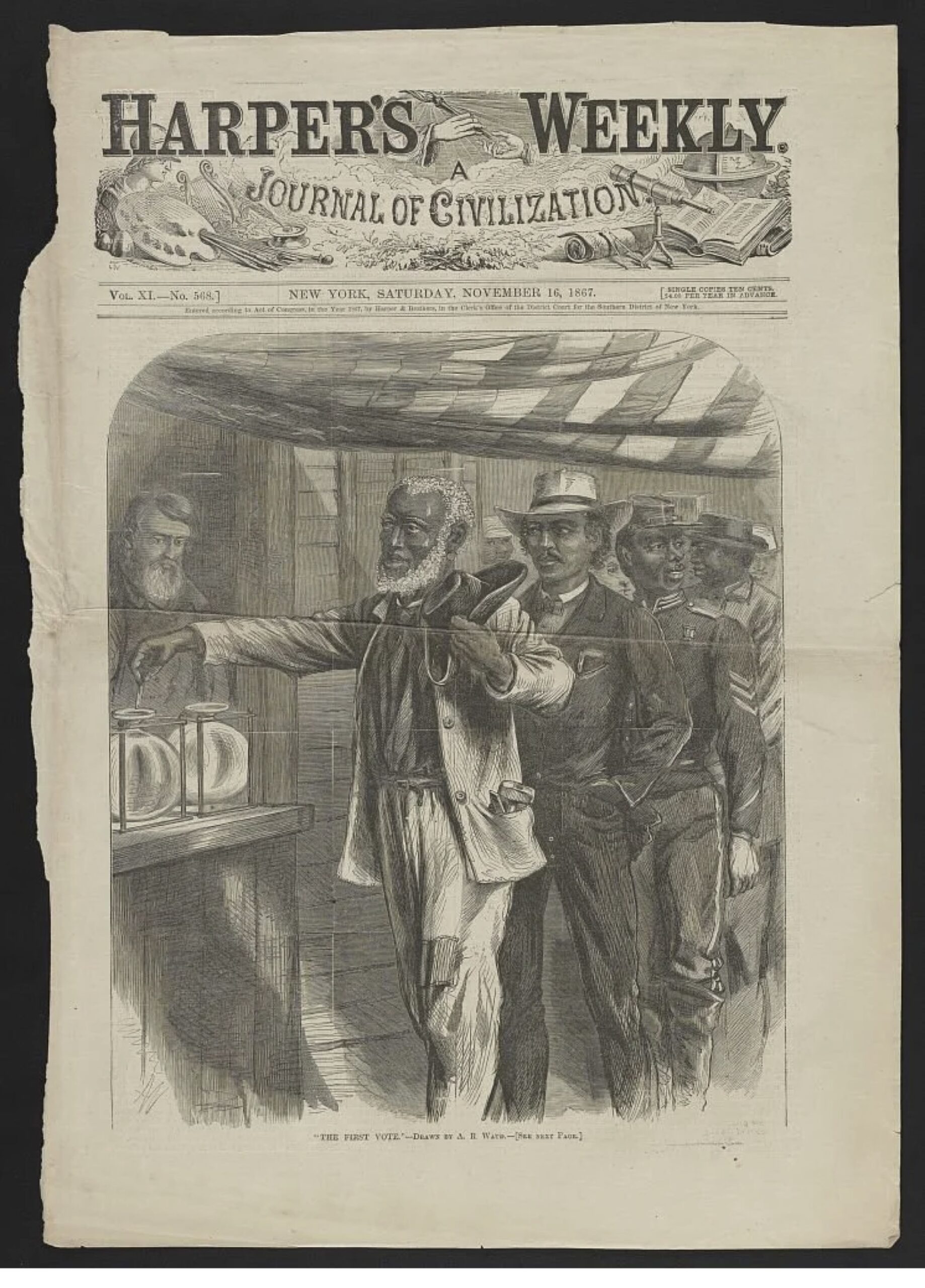
1867: The First Vote
Published in the popular Harper’s Weekly magazine in 1867, this cover illustration shows African American men — including a former Union soldier — standing in line to cast their first ballots following Emancipation.
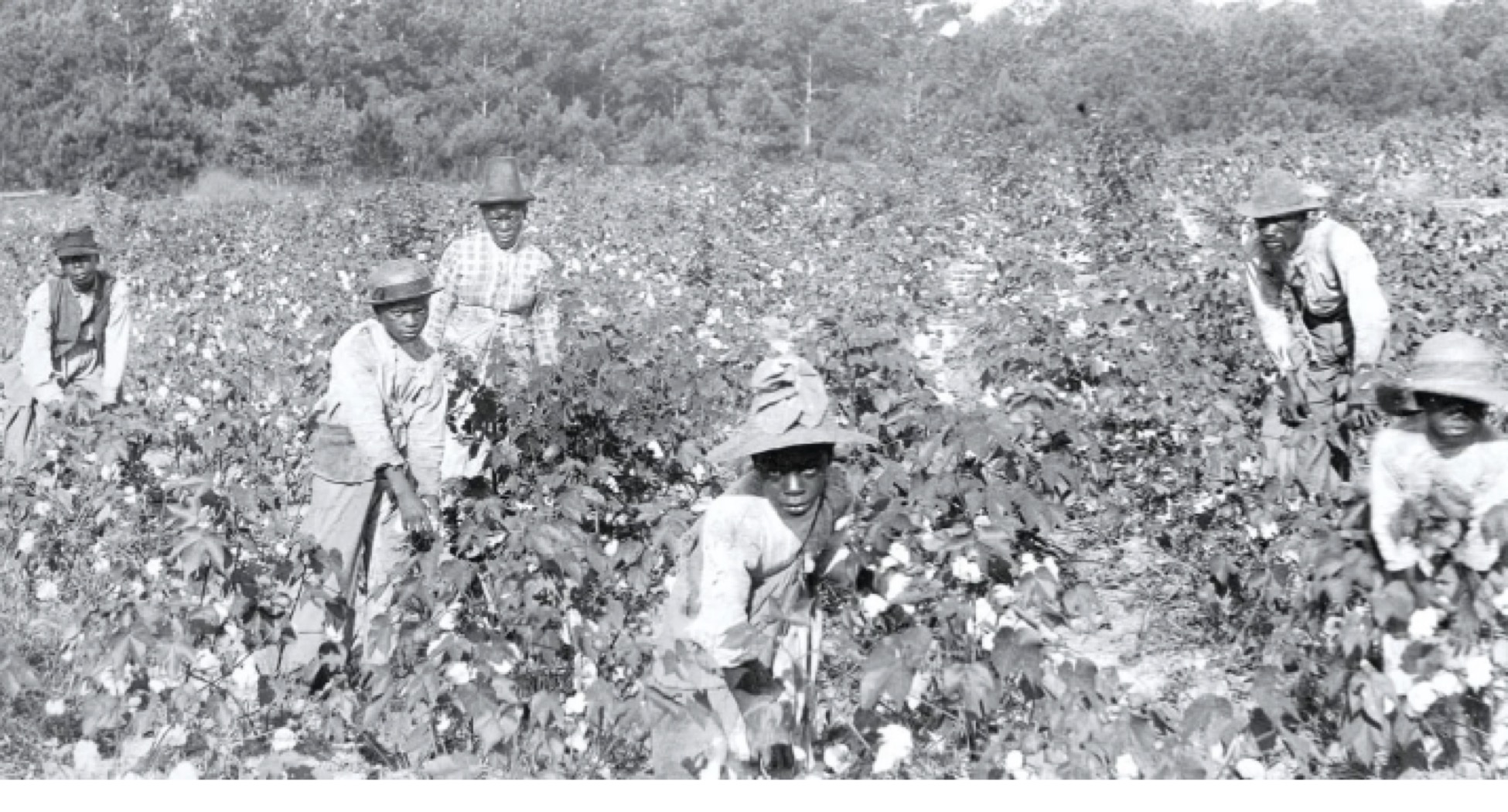
c1880: Picking Cotton, Savannah, Georgia
The Emancipation Proclamation outlawed the institution of slavery but did not establish a clear path toward equality for former slaves. Cotton plantations, based on “emancipated” African-American labor, persisted long after the Civil War.
1898: Chain Gang
The tragic echo of captured Africans lying in chains on slave ships during the Middle Passage resonates in this 1898 photograph of an African-American convict chain gang. Incarcerated at a higher rate, black Americans, then as now, continued to suffer the indignities and hardships of inequality long after the Emancipation Proclamation.


1909: NAACP Founded
The National Association for the Advancement of Colored People was founded February 12, 1909. Founders Mary White Ovington, John Haynes Holmes, Moorfield Storey, Ida Wells Barnett, Henry Moskowitz, Oswald Garisson Willard, William English Walling and W.E.B. DuBois led “The Call” to renew the struggle for civil and political liberty.
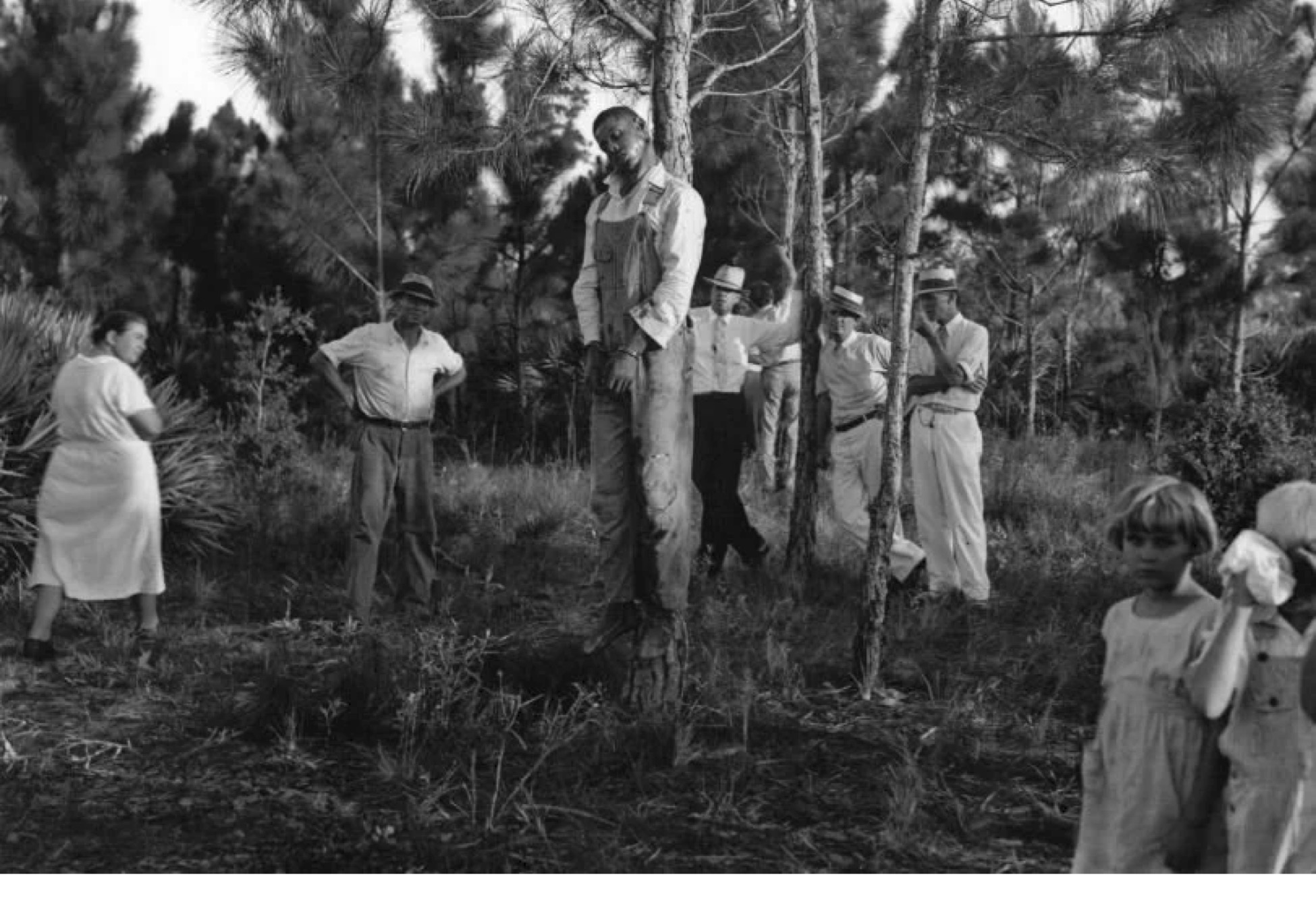
1920s: Jim Crow at its Most Evil
The deliberate murder of fellow human beings remains the most sinister legacy of Jim Crow in America. There is no excuse.
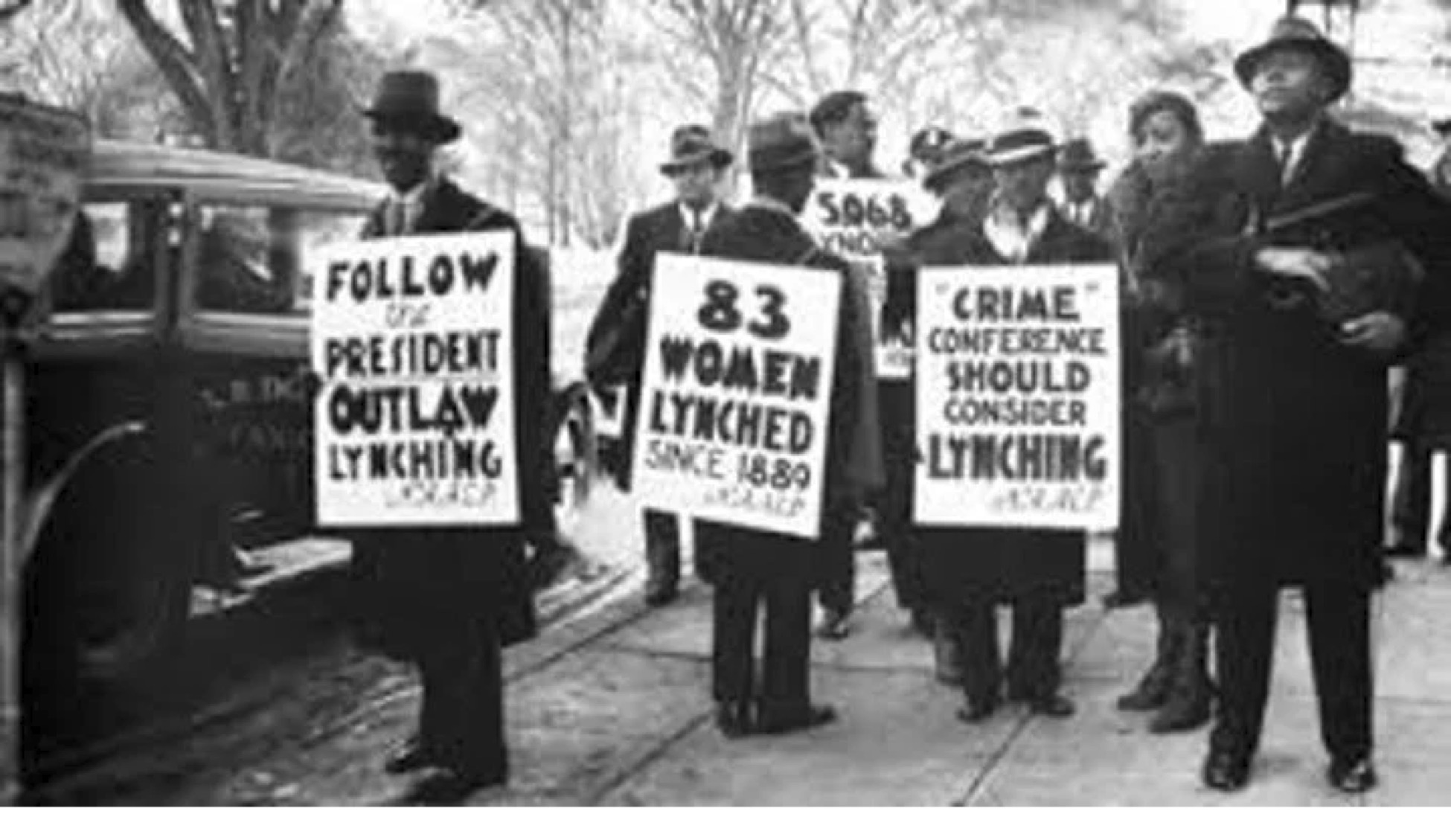
1922: Dyer Anti-Lynching Bill
Originally introduced in 1918, the Dyer Anti-Lynching Bill was recorded April 20 (calendar day July 28), 1922. It was an act to assure to persons within the jurisdiction of every State the equal protection of the laws, and to punish the crime of lynching.